Speed limit signs are among the most important regulatory signs on Irish roads. They look simple, but learners often get caught out by the difference between posted limits and default limits, by changes between road types, and by the newer 60 km/h rural local road rule. This guide explains every speed zone you are likely to see in Ireland, what each sign means, and what the RSA expects you to do on the theory test and driving test.
Road Signs in Ireland — Article Series
In This Guide
- What Are Speed Limit Signs?
- What the Sign Looks Like
- The Main Speed Zones at a Glance
- Default vs Posted Speed Limits
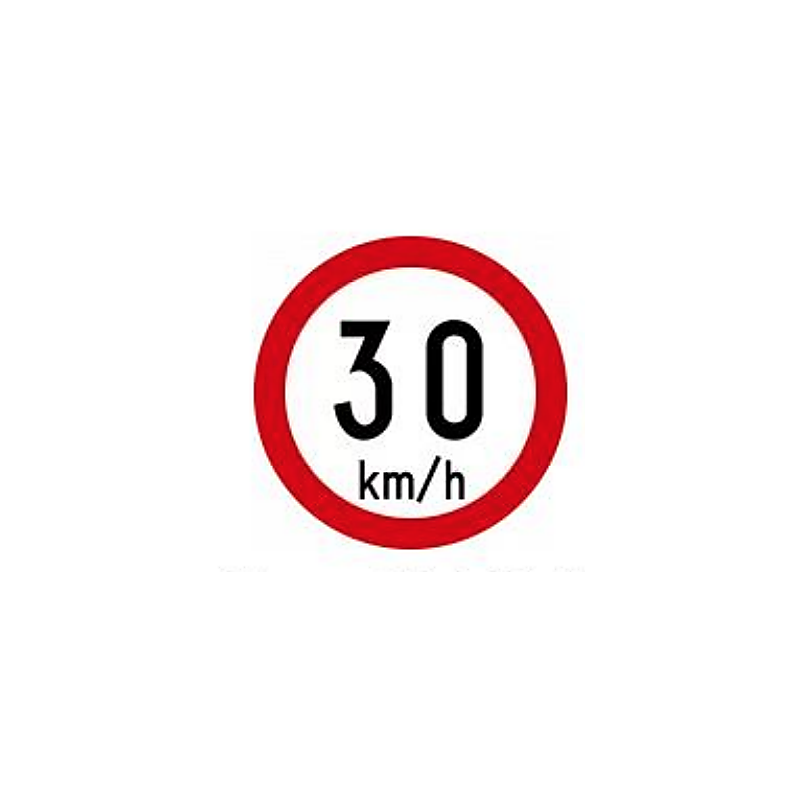
- 30 km/h Zones
- 50 km/h Zones
- 60 km/h Zones
- 80 km/h Zones
- 100 km/h Zones
- 120 km/h Zones
- The Rural Local Road Change
- Roadworks, Schools & Temporary Limits
- Common Learner Mistakes
- Theory Test Tips
- Speed Limits on the RSA Driving Test
- Frequently Asked Questions
What Are Speed Limit Signs?
Speed limit signs are regulatory signs. That means they do not advise or suggest — they impose a legal maximum speed that must not be exceeded. If a speed limit sign says 50, that means 50 km/h is the highest speed legally allowed on that stretch of road, not the speed you must aim for in all conditions.
That second point matters. A posted limit is a maximum, not a target. If visibility is poor, the road is wet, traffic is heavy, pedestrians are nearby, or the road layout is tight, you may need to drive well below the posted limit. This is especially true in housing estates, outside schools, on narrow rural roads and when approaching bends or junctions.
What the Sign Looks Like
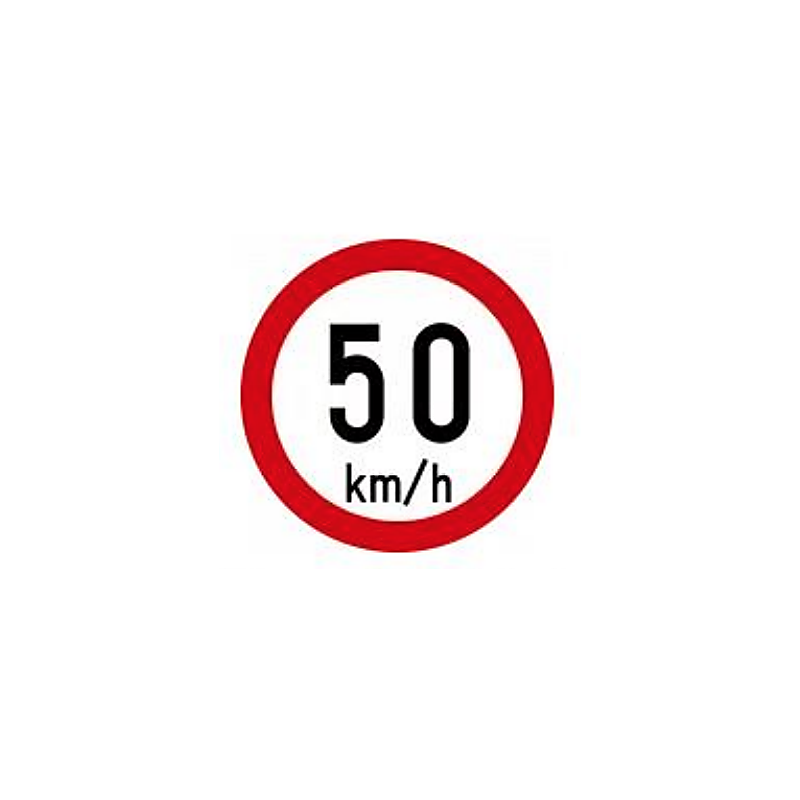
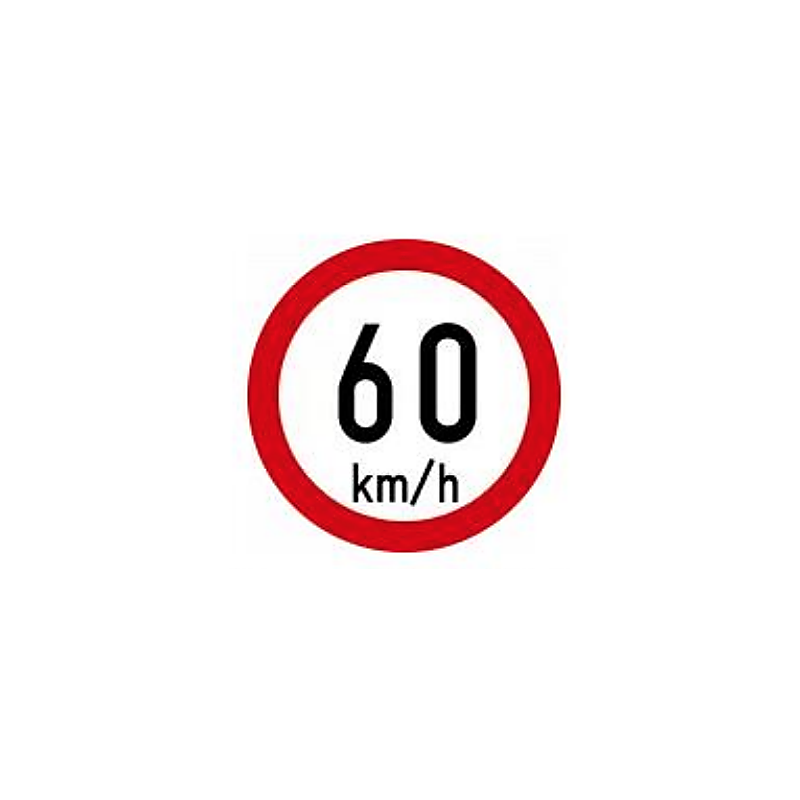
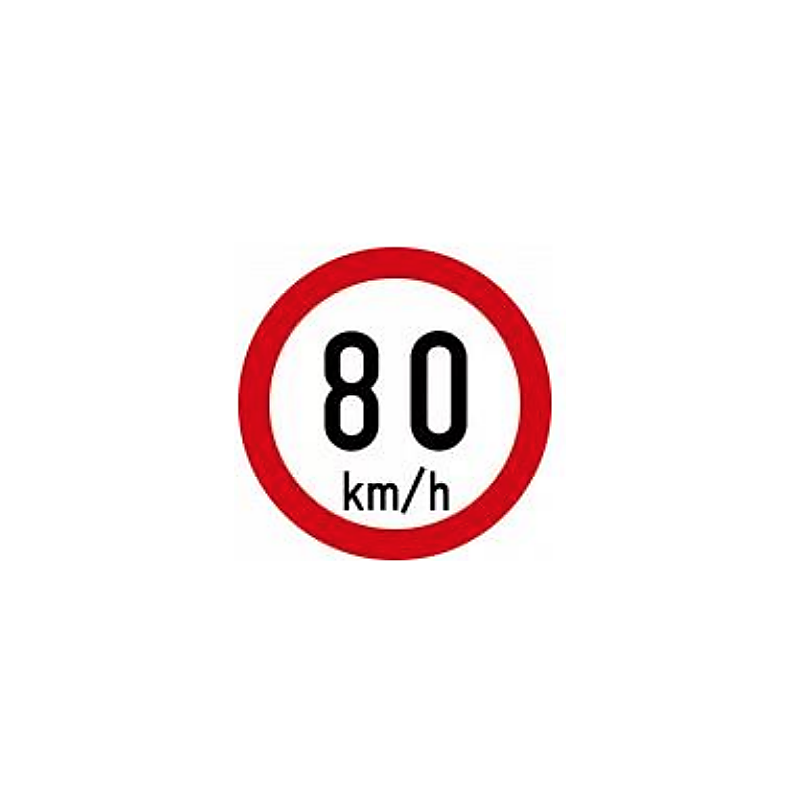
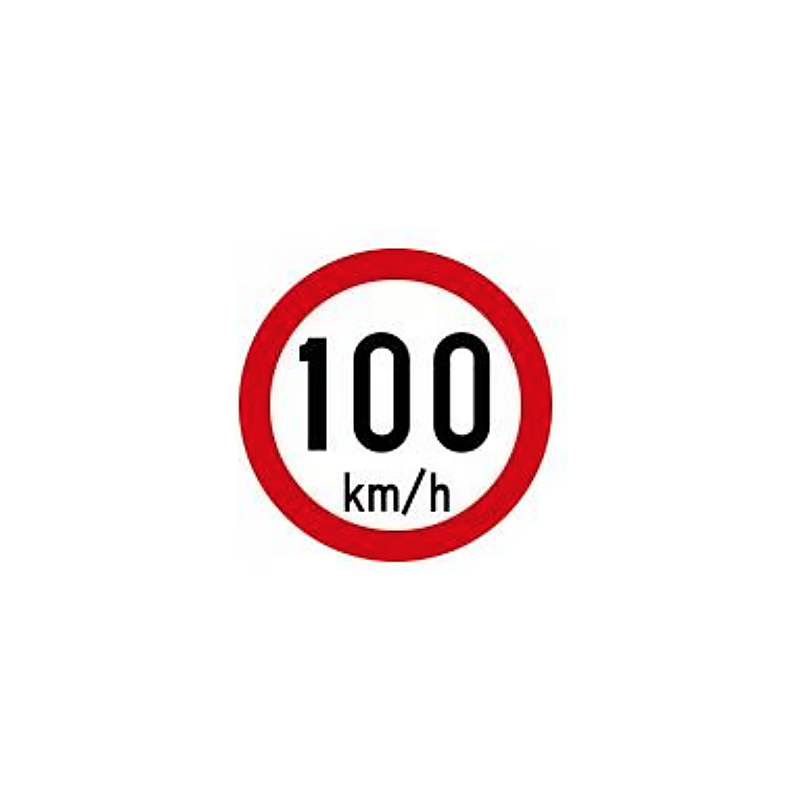
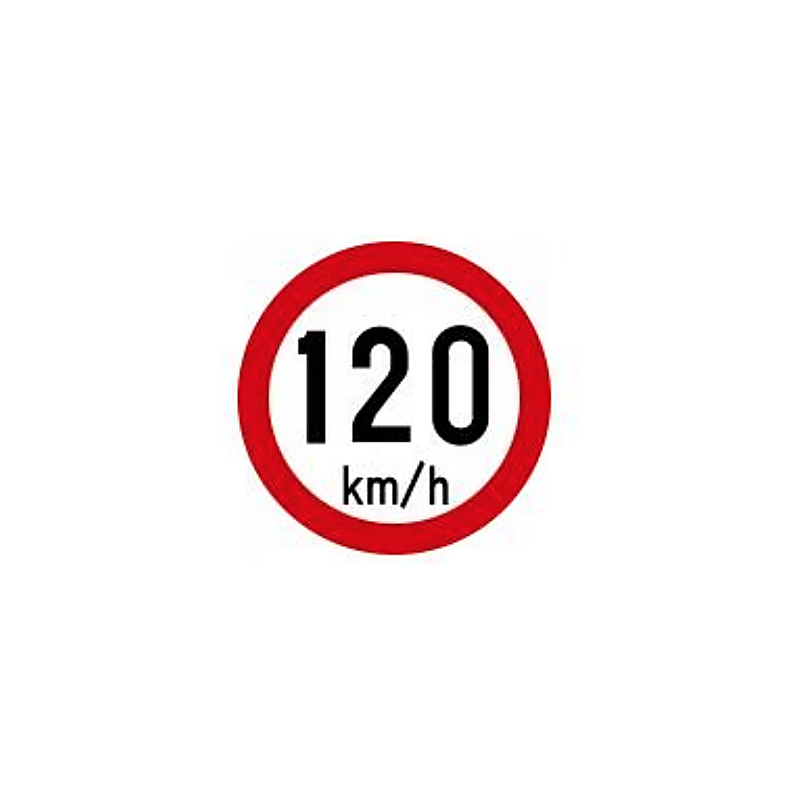
Red Circle — RegulatoryIrish speed limit signs are easy to recognise because they follow one consistent design. Once you know the design, you can identify them instantly even at a distance.
| Feature | Meaning |
|---|---|
| Shape | Circular |
| Colours | Red border, white background, black number |
| Number shown | Maximum speed in kilometres per hour |
| Legal status | Regulatory — must be obeyed |
| Driver response | Check current speed early, ease off in good time, and be below the new limit as you pass into the zone |
Ready to put speed limits into practice?
Book your EDT lessons with BP Driving School — RSA-approved, Swords, North Dublin.
The Main Speed Zones at a Glance
The six main speed values learner drivers need to know are 30, 50, 60, 80, 100 and 120 km/h. These correspond broadly to residential and school areas, urban roads, certain lower-speed transition roads, non-national roads, national roads and motorways.
3030 km/h
Residential, school and traffic-calmed areas
5050 km/h
Default built-up area speed in towns and cities
6060 km/h
Many rural local roads and some transition stretches
8080 km/h
Regional roads and some non-national roads outside towns
100100 km/h
National primary and national secondary roads
120120 km/h
Motorways only
| Speed | Usually Applies To | Key Learner Note |
|---|---|---|
| 30 km/h | Housing estates, school environments, urban calming schemes | Watch for children, parked cars and crossings |
| 50 km/h | Built-up areas | This is the default urban speed unless another sign says otherwise |
| 60 km/h | Many rural local roads; some transition roads | Common source of confusion since the 2025 change |
| 80 km/h | Regional roads and some non-national roads | Do not assume every country road is 80 anymore |
| 100 km/h | National roads (N roads) | Still often too fast in bad conditions or on poor layouts |
| 120 km/h | Motorways | Learner permit holders cannot drive on motorways |
Default vs Posted Speed Limits
This is one of the most important distinctions in Irish road law. Some roads have a speed limit because a sign specifically shows it. Other roads have a speed limit because the law assigns a default limit to that class of road even where you do not see a sign immediately beside you.
That means you cannot rely on seeing a round speed sign at every single point on your route. You need to understand the road you are on and whether the limit is coming from the road type or from a special sign/bye-law.
| Type | What It Means | Example |
|---|---|---|
| Default speed limit | The legal limit that applies because of the road class or area, even if there is no sign right beside you | 50 km/h in a built-up area; 100 km/h on many national roads; 120 km/h on motorways |
| Posted / special speed limit | A limit shown by sign because that stretch has a specific legal limit set for it | 30 km/h outside a school; 60 km/h on a particular approach road; temporary 50 km/h through roadworks |
30 km/h Zones
Low-Speed Urban Zone30 km/h zones are designed for places where vulnerable road users are especially likely to be present — children, pedestrians, cyclists and residents entering or leaving parked cars.
You will usually see 30 km/h in housing estates, school areas, local town centres, traffic-calmed neighbourhoods and urban streets where safety matters more than traffic flow. These are not places where you should aim to drive at exactly 30. In many cases, the safe speed may be lower again.
- Be ready for doors opening from parked cars
- Expect children to step out unexpectedly
- Cover the brake when visibility is restricted
- Approach ramps, humps and crossings gently
50 km/h Zones
50 km/h is the default built-up area speed limit in Ireland. In practical terms, this is the ordinary town-and-city speed you will see on many urban roads with shops, houses, bus stops, side roads and regular pedestrian activity.
Many learners make the mistake of treating 50 km/h as the speed they should always drive in town. That is not correct. On a narrow urban street with parked cars on both sides, frequent crossings and limited visibility, 50 may still be too fast. The correct approach is to treat 50 as the upper legal ceiling and then adjust down to conditions.
60 km/h Zones
60 km/h matters far more now than older theory material sometimes suggests. It is used both as a special intermediate limit and, since 2025, as the default limit on many rural local roads. That means you will increasingly see 60 associated with narrow country roads where 80 used to be assumed.
You may also see 60 on approach roads at the edge of towns, where the road transitions from rural to urban, or on stretches where the authority wants traffic slowed before entering a more built-up or complex environment.
- Narrow boreens and local roads with poor forward view
- Rural roads with hedges, bends and no hard shoulder
- Transition stretches between 80 and 50 zones
- Roads where collision risk is high despite low traffic volumes
80 km/h Zones
80 km/h remains a very common limit in Ireland, especially on regional roads and on some non-national roads outside towns. But it is no longer safe or correct to assume that every rural road is automatically 80.
On a good-quality regional road with a decent width, reasonable sightlines and less development, 80 may be the expected legal maximum. On a narrow twisting local road, however, the default may now be 60. This is why learners need to read the road class and local signage rather than rely on old habits or hearsay.
100 km/h Zones
100 km/h is the usual default on national roads — both national primary and national secondary roads. These are N-prefix roads. They may be wide and well surfaced, but they are not all dual carriageways or motorway-standard routes, so a posted or default 100 does not guarantee that 100 is safe at every moment.
On national roads you still need to watch for:
- Right-turning traffic
- Tractors and slow vehicles
- Junctions and side-road traffic
- Weather and spray reducing visibility
- Changes to lower limits on approach to towns or villages
120 km/h Zones
Motorway Only120 km/h applies on motorways only. These are M-prefix roads designed for high-speed traffic with controlled access.
Motorways have the highest ordinary speed limit in Ireland, but learner permit holders are not permitted to drive on them. That said, motorway limits and motorway transition signs still matter for your theory test and for your general understanding of the Irish road system.
When a motorway begins, the applicable rules change: motorway-only regulations apply, and the default speed becomes 120 km/h unless another sign states otherwise. When the motorway ends, you must be alert for the new lower limit applying on the road you are joining.
The Rural Local Road Change
This is the big update many learners and full licence holders still miss. In February 2025, Ireland introduced a change so that the default speed limit on many rural local roads fell from 80 km/h to 60 km/h. The change was made as part of wider road-safety reforms and is particularly relevant on narrow local roads and boreens.
Why does this matter? Because older study guides, older instructors' notes, older family advice and older blog posts may still tell you that 80 is the default on all rural non-national roads. That is no longer a safe assumption.
| Road Type | Older Assumption | Current Reality |
|---|---|---|
| Rural local roads / boreens | Often assumed 80 km/h by default | Many are now 60 km/h by default |
| Regional roads | Often 80 km/h | Still commonly 80 km/h unless a different limit is set |
| National roads | 100 km/h | Still generally 100 km/h unless signed otherwise |
Roadworks, Schools & Temporary Limits
Not all speed limits are permanent. Some are temporary or situational. You will commonly meet these in roadwork zones, school areas and traffic-management schemes.
Roadworks
Temporary speed limits through roadworks are fully enforceable. They may be paired with orange temporary signs, lane changes, narrowed carriageways, loose chippings or workers on the road. Even if you cannot immediately see workers, the temporary limit still applies if the sign is in force.
School Areas
School environments may have 30 km/h limits or other lower-speed arrangements depending on the local authority's setup. Expect signage, road markings, wardens, crossings and high pedestrian unpredictability. These areas demand observation as much as speed control.
Speed Limit Change Ahead
You may also see an advance sign warning that a different limit is about to begin. Treat that as your cue to ease off early — not as permission to wait until the last second and brake sharply at the boundary.
Learning to drive in North Dublin?
BP Driving School covers Swords, Malahide, Portmarnock, Santry, Raheny and surrounding areas.
Common Learner Mistakes
- Assuming every rural road is 80 km/h: this is the biggest post-2025 mistake.
- Braking too late for a lower-speed zone: you should be settled into the new speed by the time you enter it.
- Treating the posted limit as a target: especially dangerous in 30 and 50 zones.
- Failing to notice transition signs: many test routes include quick changes from 50 to 60 to 80 or back again.
- Forgetting that motorways are off-limits to learner permit holders: but still examinable in theory.
- Driving at 100 on a national road in poor conditions: legal maximum does not mean safe speed.
Theory Test Tips
- Memorise the sign shape and colour: circle, red border, white background.
- Know the six main values: 30, 50, 60, 80, 100, 120.
- Learn the default limits as a system, not as isolated facts.
- Know that learner permit holders may not drive on motorways.
- Update any old notes to reflect the newer rural local road 60 km/h change.
- Remember that speed limits are maximums, not targets.
Speed Limits on the RSA Driving Test
Speed awareness is monitored throughout the RSA driving test. The assessor is not just checking whether you stay under the limit. They are also judging whether you:
- notice the sign promptly
- adjust your speed smoothly
- match your speed to the environment
- avoid hesitancy caused by poor reading of the road
Driving too fast is obviously serious. But driving far too slowly for a road without reason can also show weak progress and poor confidence. The goal is safe, legal, appropriate speed — not just low speed.
Frequently Asked Questions
Continue in the Road Signs series
Knowing the numbers is one thing — recognising speed-limit changes early and adjusting smoothly on real roads is a skill built through practice. Book your EDT lessons with BP Driving School — RSA-approved, Swords, door-to-door pickup, manual & automatic.
Preparing for your test? Book a mock test to check your readiness before the real thing.